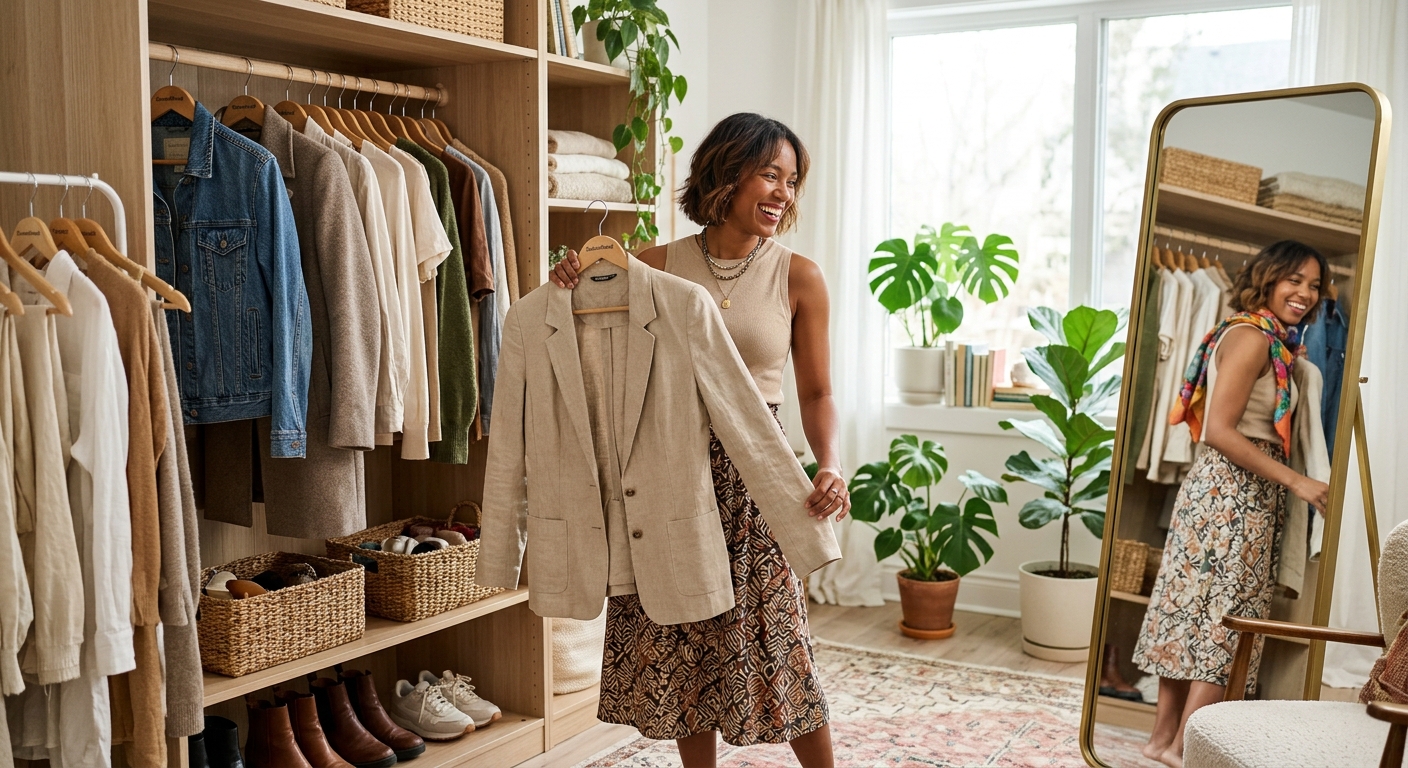
How to Refresh Your Personal Style With a More Sustainable Wardrobe
Your favorite outfit might already be in your wardrobe, hidden behind the pieces you keep wearing in exactly the same way. A shirt feels tired until you roll its sleeves. Trousers feel awkward until you try a different shoe. Sometimes, the urge for a new look is really a wish to feel more comfortable and intentional in what you own. Start there, before opening a shopping app.
Your Wear-More Starting Point
- Try new outfit proportions with clothes you already own.
- Build a manageable grooming routine around your comfort.
- Repair and restyle before deciding anything needs replacing.
Start With the Life You Actually Dress for
A wardrobe refresh works best when it fits your ordinary days. Think about where you spend your time. Perhaps you work from home, cycle to appointments, care for children, or spend hours standing. Clothes need to support those activities before they can earn a regular place in your rotation.
Choose three words that describe how you want to feel. Relaxed, expressive, and tidy might suit you. Soft, practical, and playful might fit better. These words give you a useful filter without forcing you into a particular aesthetic.
Next, pull out five pieces you wear often. Notice what they share. You might favor loose sleeves, soft waistbands, deep colors, or pockets that actually hold things. Those preferences tell you more about your personal style than a folder of outfits you would never comfortably wear.
Keep clothes that currently fit your body within easy reach. There is no need to make getting dressed a daily negotiation with an uncomfortable waistband. Set aside pieces that need a decision, and give yourself room to dress comfortably today.
Change the Outfit Proportions Before Changing the Clothes
Proportion is the relationship between the shapes and lengths in an outfit. A long shirt over loose trousers creates a different outline from the same shirt tucked into the waistband. Neither is automatically better. The useful question is which version feels right for your taste and your plans.
Try One Adjustment at a Time
Put on a familiar outfit and change one detail. Fold a trouser hem, push up jacket sleeves, or leave a cardigan open. Notice where the clothing ends and how the pieces sit beside each other.
If an outfit feels shapeless to you, a partial tuck might create the definition you want. If it feels too structured, wearing the shirt loose could make it more relaxed. Treat these changes as experiments, rather than rules about which bodies should wear particular shapes.
You can also work with volume. Try a roomy knit with straight trousers, then with a fuller skirt. Both combinations can work. Pay attention to how the fabric moves and whether you spend the day adjusting it.
Use Shoes and Layers to Shift the Mood
Footwear can change how an existing outfit reads. Clean trainers may make tailored trousers feel casual. Boots can give a soft dress more visual weight. Use what you already have, including pairs that have fallen out of your usual rotation.
Layers offer another route. Wear an open shirt over a simple top. Put a fine knit under a sleeveless dress if the fit allows comfortable movement. Repeat a color in your scarf and shoes to connect pieces you previously treated as unrelated.
Try sitting, reaching, and walking before calling an experiment successful. An outfit that only works while standing still is unlikely to become a favorite.
Make Grooming a Small, Repeatable Part of Getting Dressed
Thoughtful grooming can help an outfit feel finished without adding anything to your wardrobe. The goal is a routine you can maintain, using products and tools you already own where possible.
Choose the details that make a difference to you. That could mean brushing your hair into a preferred shape, keeping facial hair at a comfortable length, or cleaning your glasses. Makeup, shaving, and elaborate hair styling are personal choices. None is a requirement for looking cared for.
- Clean shoes using a method suited to their material.
- Remove visible lint and loose threads from clothing.
- Brush or arrange your hair in a way that suits your day.
- Keep nails clean and at a manageable length.
- Check collars, cuffs, and fastenings before leaving.
Make the routine realistic for your energy, mobility, hair texture, and schedule. A five-minute approach you enjoy can be more useful than a complicated routine you resent.
Resist buying several grooming products because a video promises a complete transformation. Use up suitable products you already have. If you need a replacement, identify the specific job it needs to do before choosing it.
Take Online Appearance Ideas Through Your Own Filter
Online appearance trends can offer styling prompts, but they can also make ordinary features feel like problems. Watch for advice that turns personal taste into a rigid ranking system. Your face and body do not need a score.
If you want another source of appearance ideas, an AI glow-up guide can be an optional starting point. Assess any suggestions against your comfort, budget, and sustainable wardrobe goals. A prompt to try a different parting or clothing combination may be useful. A recommendation that requires constant spending may have little place in your routine.
You can accept one idea and leave the rest. Ask whether the suggestion helps you express something you already enjoy. Consider whether you can try it with existing clothes or grooming tools. Give yourself permission to stop if the process leaves you feeling scrutinized rather than inspired.
Keep Consent and Privacy Part of the Process
Before uploading a photograph to any appearance tool, read its privacy information. Check what it says about storage, deletion, sharing, and use of uploaded images. If those details are unclear, choose a text-only approach or skip the upload.
Use only photographs you have permission to share. A group photo includes other people’s faces, even if your own appearance is the focus. Ask before uploading someone else’s image or requesting appearance feedback about them.
Check the background too. A mirror photo might reveal an address label, work badge, or private room. You do not need to share a face photograph to think about trouser lengths, color combinations, or wardrobe habits.
If browsing leads to repeated checking, comparison, or pressure to change, step away. Return to a more useful measure: whether your clothes feel comfortable and help you get on with your day.
Bring Neglected Clothes Back Into Rotation
Before buying anything, look at the pieces you keep passing over. Each usually has a reason. A missing button, an awkward length, or uncertainty about styling can make a wearable garment disappear from daily use.
New York State’s environmental agency recommends taking an inventory, repairing garments, and considering borrowing for short-term needs in its textile reuse guidance. These are practical ways to keep existing clothing useful while making more deliberate buying decisions.
Give one neglected piece a fair trial. Wear it with your most reliable trousers or simplest top. You may find that it needed an easier companion, rather than several new accessories.
For repairs, start with the problem that would return an item to regular wear. Reattaching a button may be manageable at home. A lining repair or fit adjustment may need professional help. Ask about cost and likely results before committing, especially if the fabric is already fragile.
Care matters too. Follow garment labels, address stains appropriately, and avoid washing pieces automatically after very brief wear when they are still clean. Choose care methods that suit the fabric and how the item was used.
Run a Wardrobe Trial Before You Make a Shopping List
A short trial gives you evidence about what you need. Over the next week, use a few minutes of getting-dressed time to test combinations. Keep the process small enough that it does not become another chore.
- Choose an outfit you trust. Identify the fit, fabric, or color that makes it comfortable.
- Change one proportion. Adjust a tuck, sleeve, hem, or layer using existing pieces.
- Add one grooming detail. Pick something manageable, perhaps clean glasses or neatly arranged hair.
- Wear it during normal activities. Notice movement, temperature, and any repeated adjustments.
- Record what worked. Write a sentence or take a private outfit photo for your own reference.
At the end of the week, look for recurring problems. Perhaps several outfits would work better if one pair of trousers were hemmed. Maybe your shoes need maintenance. Those findings give you a clearer next step than a vague feeling that everything needs replacing.
Repeat successful outfits freely. A combination you enjoy is worth wearing again. Small changes in layers or accessories can offer variety, but repetition itself needs no apology.
Buy Only After You Can Name the Missing Job
A sustainable refresh can include a purchase. Wait until you can describe what it needs to do. “A washable layer for cool mornings that fits over my usual shirts” is a useful brief. “Something that makes my wardrobe feel new” is harder to satisfy.
Try borrowing or swapping first when the need is temporary. For a lasting gap, consider secondhand options and inspect condition carefully. Check seams, fastenings, fabric wear, and measurements. A low price is less helpful if the piece needs repairs you cannot manage.
Think through several outfits using clothes at home. Consider care requirements and likely wear, too. A garment can suit your taste while still asking more maintenance than you want to give it.
Avoid discarding useful clothes simply because your preferences are changing. Store seasonal pieces sensibly, offer wearable items to willing recipients, or check local reuse options. Confirm what an organization accepts before donating.
A Fresh Look You Can Keep Wearing
Your refreshed style might be a familiar shirt worn differently, trousers that finally sit comfortably, and a grooming routine that takes little thought. Those changes can make getting dressed feel more satisfying without creating a long shopping list.
Let everyday wear guide the process. Keep the combinations that feel comfortable. Repair the pieces you miss wearing. Use online ideas selectively, with your privacy and self-image in mind. The best result is a wardrobe that feels more useful, more personal, and easier to return to tomorrow.